


Latest News
October 21, 2026 | Text: Markus Selinger | Antivirus for Windows
13 security packages under Windows 11 in the six-month endurance test
Trojans, ransomware, infostealers, phishing, spam – that’s just a short listing of the major threats to a user’s computer. The only thing that can really help is truly effective protection software. In the recent endurance test, which was carried out over a period of 6 months, the AV-TEST experts evaluated 13 security suites under Windows 11 for protection, performance and usability. Many of the suites produced excellent results. The majority of these security products protected the test systems quite well; nevertheless, there were several differences when it came to the overall results.

13 security packages in an endurance test under Windows 11:
The best protection packages for consumer users face off against thousands of malware samples in the lab test
Unfortunately, on the flip side, the increase in new malware continues unabated, and AI is proving to be an additional catalyst for this growth.
Studies across the globe indicate that AI-driven polymorphism is present in nearly 75 percent of newly discovered dangerous software today. AI systems are being used to constantly adapt malware and serve them up in different combinations. The threat intelligence platform, AV-ATLAS, only substantiates this claim with data on these threats in real time.
The protection products available on the market today also need to detect, filter out and delete this polymorphic malware. The current test put 13 security suites through their paces in the endurance test under Windows 11 to determine how well they fare when faced by these adaptive cyberthreats. The team in the AV-TEST lab examined the products over the course of 6 months using more than 800 samples of new zero-day malware and more than 35,000 known malware samples. The test experts checked the extent to which the malware was detected and blocked, as well as how much the security suites slowed down the Windows operating system. Plus, they looked at the number of false alarms generated by the products.
Included in the test were products from Avast, AVG, Avira, Bitdefender, EnigmaSoft, ESET, F-Secure, K7 Computing, Kaspersky, McAfee, Microsoft, Norton and TotalAV. The findings are sure to be of interest to many users: 6 out of the 13 products scored 18 points – the highest score possible – and 4 products followed closely behind with scores ranging from 17.7 to 17.8 points.
13 security packages under Windows put to an endurance test
The first main category of testing is protection. There, the team of experts probed the security suites, subjecting them to 250 brand-new and difficult-to-detect zero-day malware, with new samples every 2 months. Once this so-called real-world test was completed, a reference set followed, which is also updated every 2 months. The products were exposed to 12,000 known, but particularly dangerous malware samples.
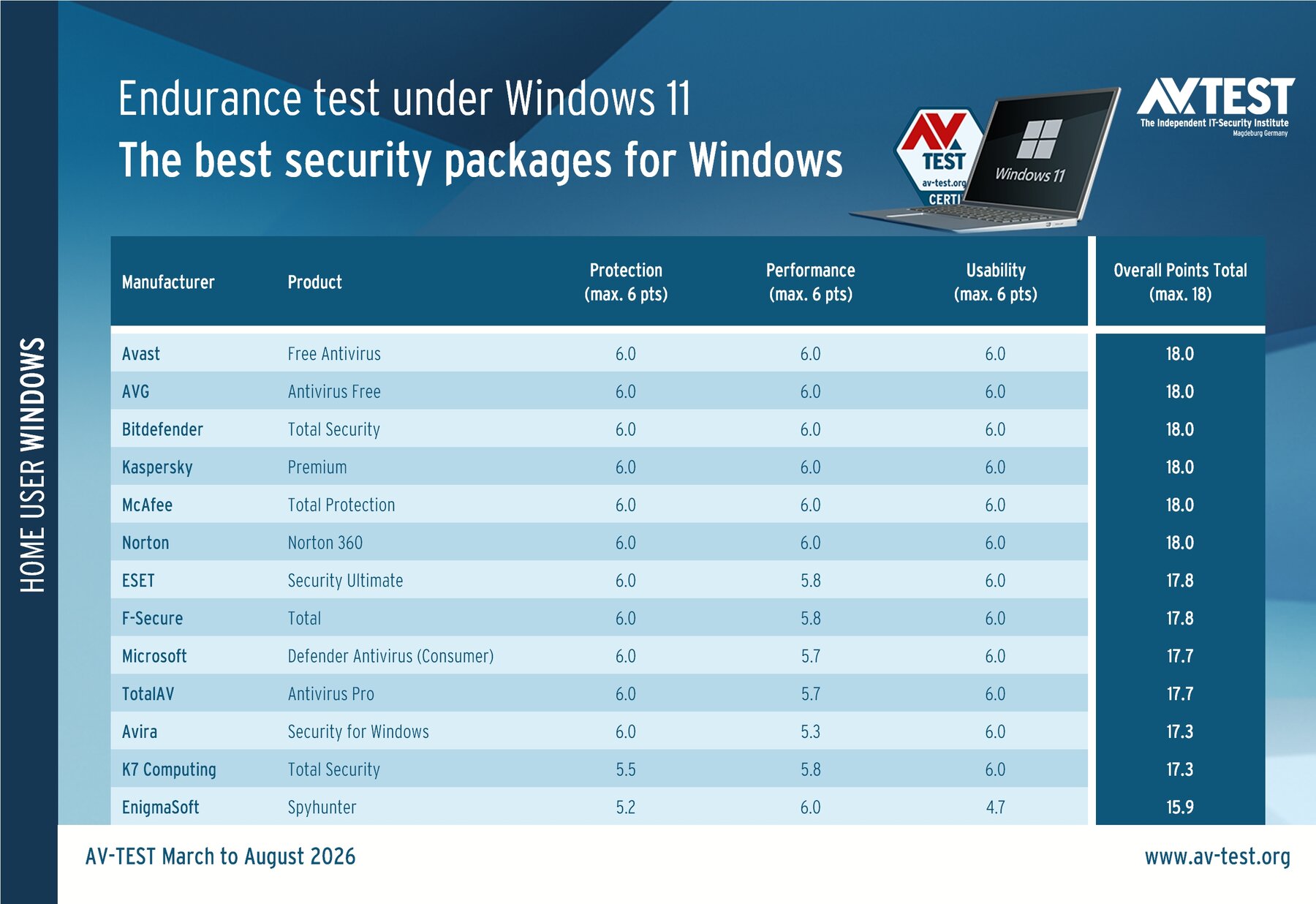
Security packages in an endurance test under Windows 11
In the six-month endurance test, 6 of the 13 security products examined earned the maximum point score
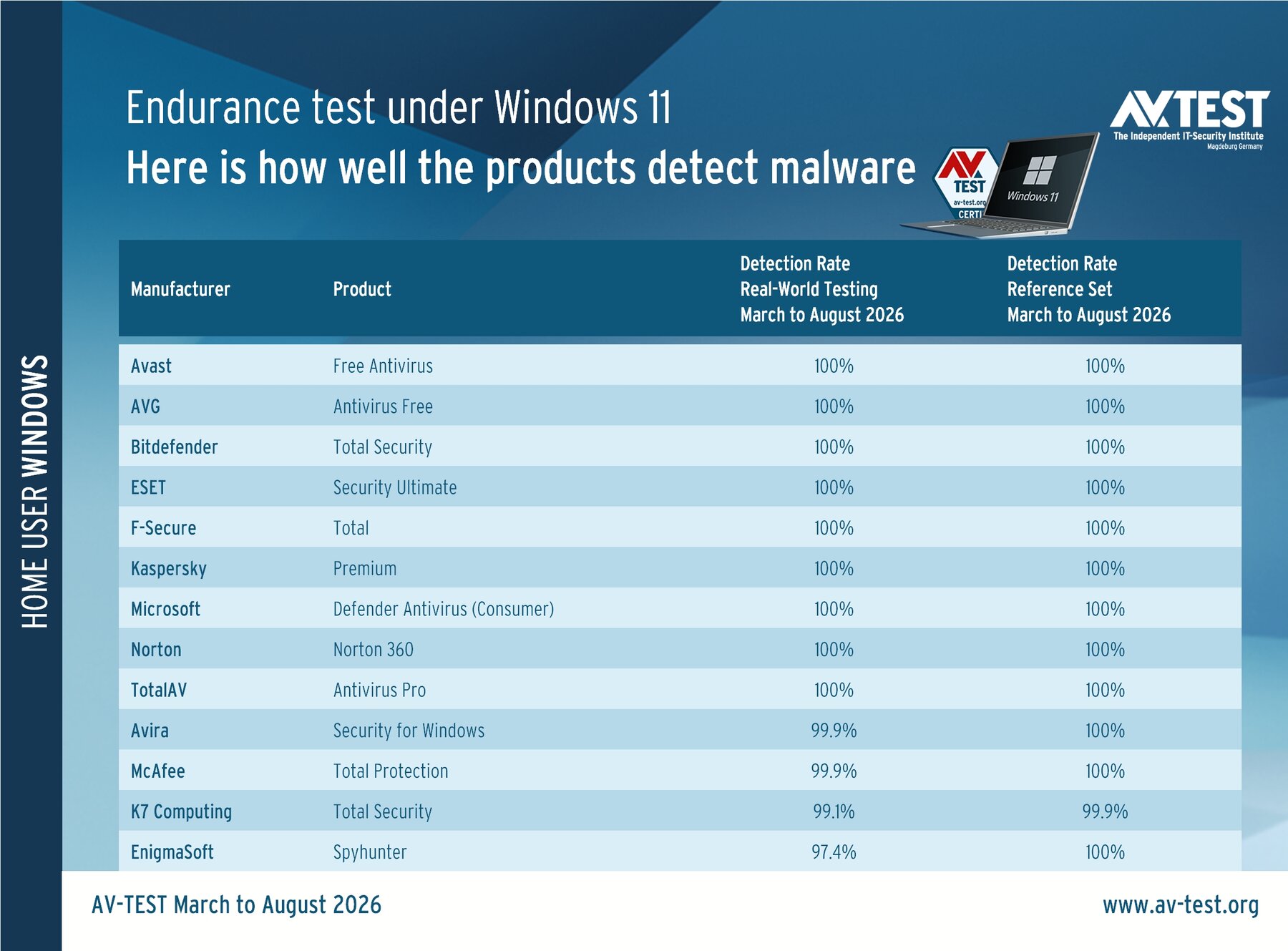
Malware detection in an endurance test under Windows 11
All the tested products needed to detect and block thousands of samples of brand-new and known malware from March to August 2026


The test scorecard shows a summary of the detection rates for each security product. 9 out of the 13 products examined passed the test with flying colors, detecting all of the malware both in the real-world test and from the reference set. The best performing products in this category came from Avast, AVG, Bitdefender, ESET, F-Secure, Kaspersky, Microsoft, Norton and TotalAV.
The suites from Avira and McAfee each made a minor mistake in the real-world test, leading to a detection rate of 99.9%. Regardless, they scored 100% in the reference set. This means that all 11 of these products received the maximum score of 6 points for this excellent feat.
The products from K7 Computing and EnigmaSoft failed to detect individual attackers and in turn lost a few points in the scoring; out of 6 points possible they scored 5.5 and 5.2, respectively.
Strong protection with a low system load
Security software needs to be a constant presence, always running in the background, if it is to work effectively. This nonstop activity will potentially push system resources under Windows to the limit, or will it? To answer this question, the lab testers perform a comparison using a standard office computer and a high-end computer. They carry out the tasks on both devices: copying data locally and to the network, accessing hundreds of websites, carrying out downloads and installing and launching applications. The time required for all these tasks establishes the basis for the reference time in the test. Then the lab repeats all of the tasks, but this time the team installs a security suite.
7 out of the 13 suites tested showed that they could operate perfectly in the 6-month testing period and that the excellent performance did not place an excess burden on the test systems. The following protection apps earned the full 6 points for their good achievements: Avast, AVG, Bitdefender, EnigmaSoft, Kaspersky, McAfee and Norton.
The packages from ESET, F-Secure and K7 Computing caused minor peaks in the system load when performing the tasks. Still, all three received an excellent point score of 5.8. The products from Microsoft and TotalAV taxed the systems just a little more than the others: both ended up with 5.7 points.
Only the package from Avira slowed down the test systems noticeably, which means it only scored 5.3 out of the 6 points possible.
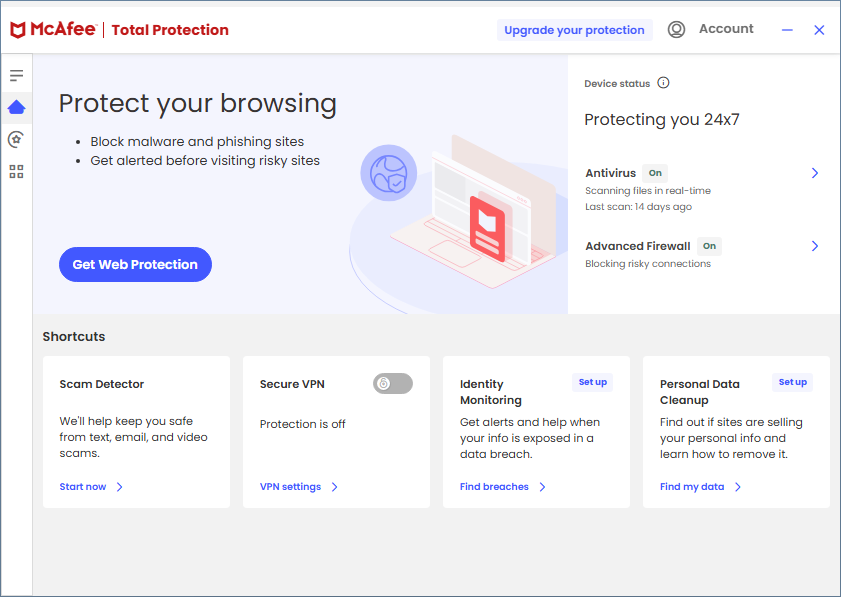
McAfee Total Protection
The security package from McAfee earned the full 6 points in each of the 3 test categories, resulting in an overall score of 18 points
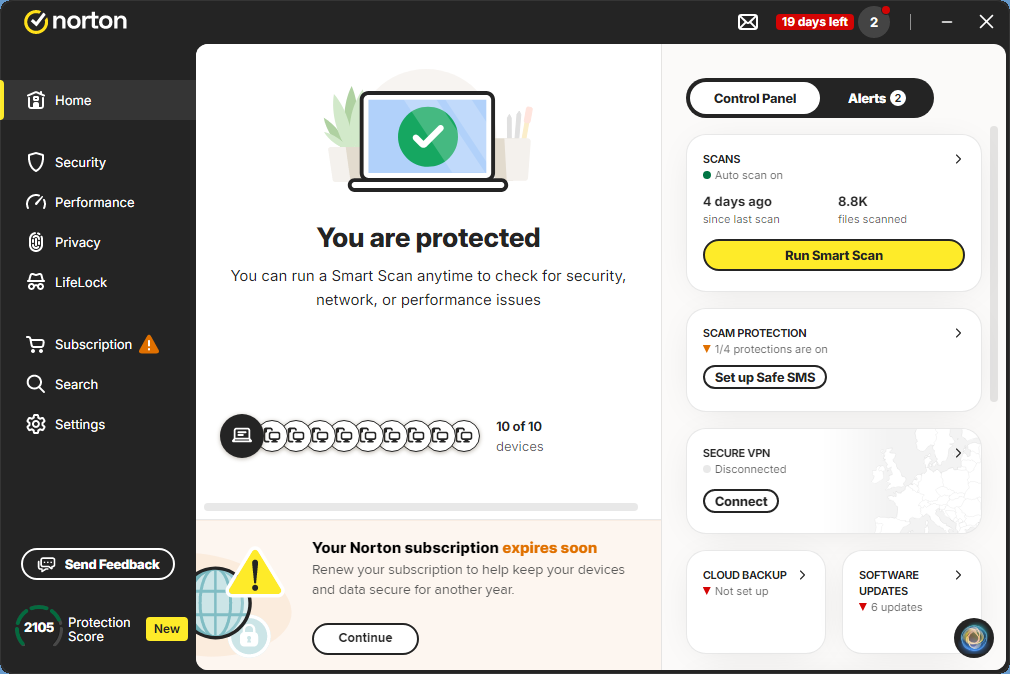
Norton 360
The product from Norton earned the maximum score of 18 points – demonstrating a stellar performance in the endurance test
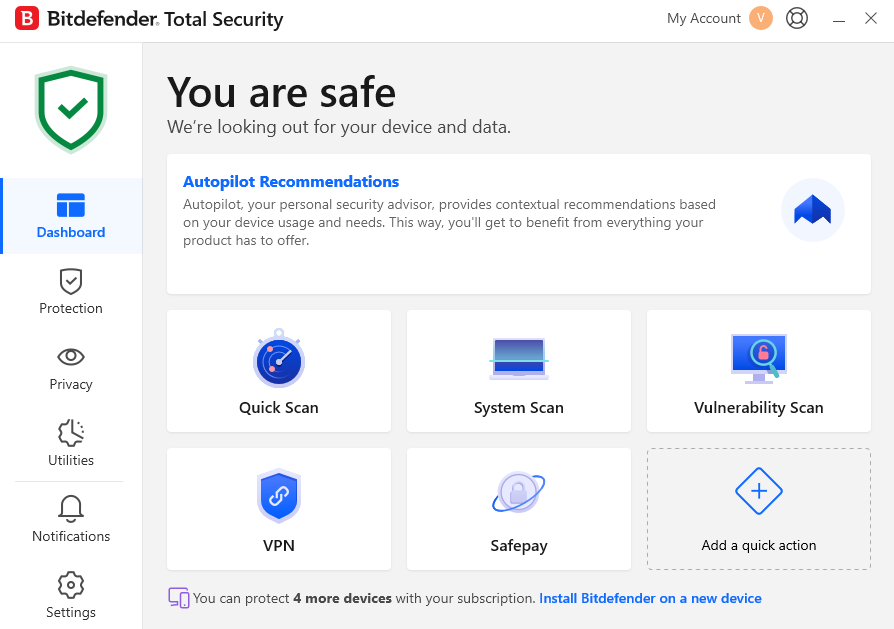
Bitdefender Total Security
The security package from the Romania-based security product vendor performed flawlessly in the endurance test, earning the full 18 points
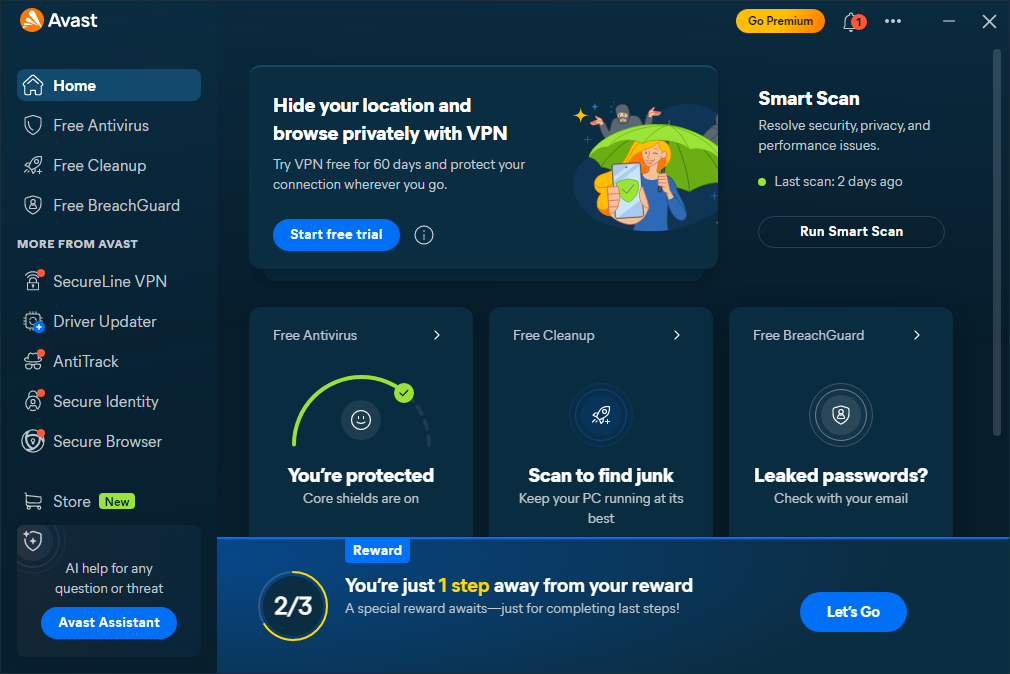
Avast Free Antivirus
The full score of 18 points proves that this free security package has passed all tests with flying colors
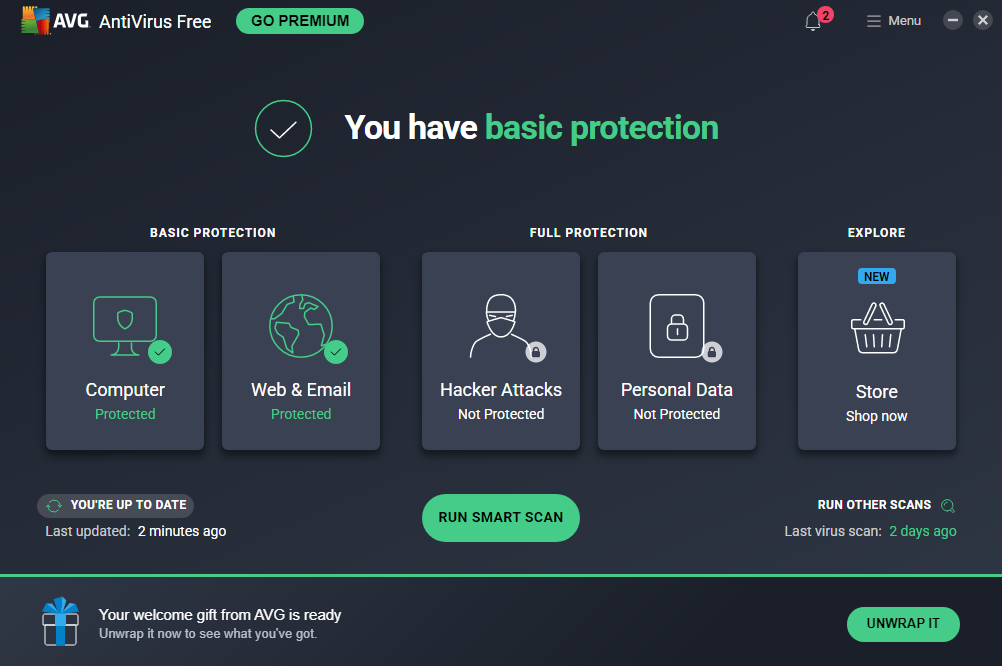
AVG Internet Security
The security package from AVG for Windows earned the full 18 points for its flawless performance in the endurance test
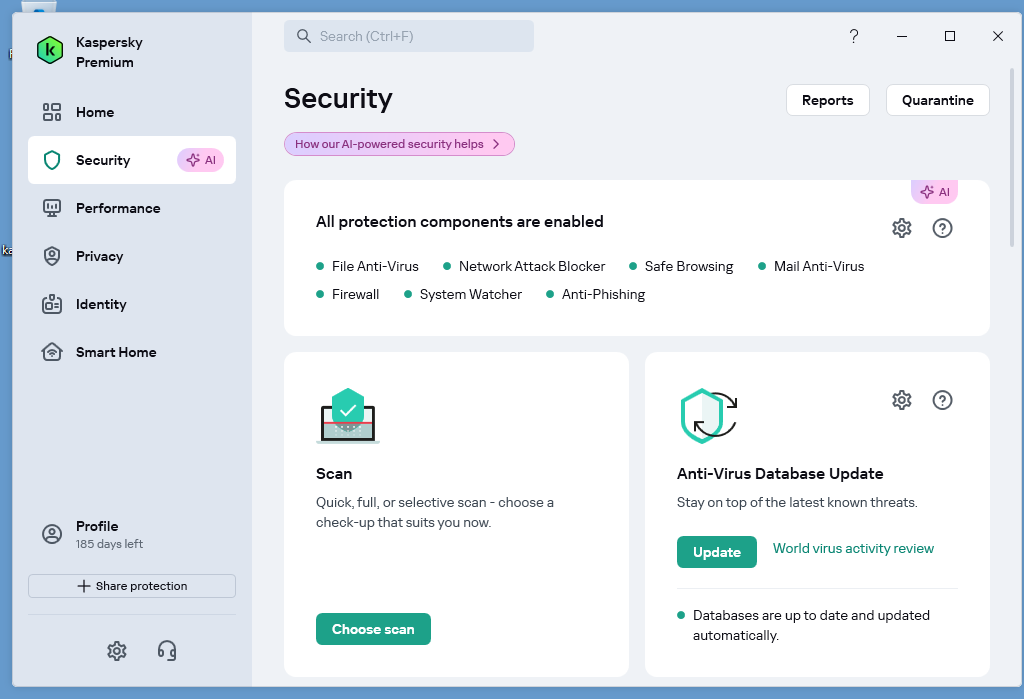
Kaspersky Premium
This security package earned the maximum score in each of the 3 test categories in the endurance test, meaning it achieved the full 18 points
False alarms: much ado about nothing
The security packages need to provide reliable protection – all while avoiding false alarms. The testing team examined this behavior in the usability category. The products all need to scan harmless files and websites in the test for false-positive detection. The experts visit 1,500 websites, install and run dozens of popular apps and scan more than 3.5 million innocuous files in the endurance test.
Nearly all of the products produced perfect test results. For this excellence, those packages received the maximum achievable 6 points. It was only the product from EnigmaSoft that encountered a series of detection issues, often filtering out harmless files or blocking normal programs. In the end, the product thus achieved 4.7 points in the ranking.
Endurance test with an excellent outcome
There is no question about it. Users need the highest level of protection when running a system under Windows 11. But the choice is relatively easy based on the outcome of this endurance test. After 6 months of persistent testing, the security packages from Avast, AVG, Bitdefender, Kaspersky, McAfee and Norton all achieved 18 out of 18 points possible – a perfect result for this group of 6.
Hot on their heels were ESET, F-Secure, Microsoft and TotalAV, which achieved very good results ranging from 17.7 to 17.8 points. And in the end, Avira and K7 Computing also earned a total of 17.3 points. This doesn’t paint a picture of underachievers.
Much to the contrary, if users only want to pick an antivirus product based on its protection level, then they could pick from 11 out of 13 security packages, judging by their excellent scores.
The best Windows antivirus software for home users
Windows 11: April 2026


The best Windows antivirus software for home users
Windows 11: Juni 2026
The best Windows antivirus software for home users
Windows 11: August 2026